
Silicon Carbide Fibers: Engineering Next-Gen Ceramic Matrix Composites (CMCs)
A comprehensive look at the synthesis, chemical stoichiometry, thermomechanical performance, and supply architecture of high-performance continuous SiC reinforcement fibers.
1. Understanding Silicon Carbide (SiC) Fibers: Generational Evolution
Silicon Carbide (SiC) fibers represent a class of highly structured inorganic materials synthesized through the controlled pyrolysis of organometallic polymer precursors. Originating from the groundbreaking "Yajima method" utilizing polycarbosilane (PCS) precursors, the evolution of commercial Silicon Carbide fibers has progressed across three technical generations. Each iteration has aimed to minimize oxygen contamination, optimize chemical stoichiometry, and establish exceptional structural stability under high mechanical loads and aggressive chemical exposures.
- Generational Purity: Gen-1 (highly oxygenated ~10-15 wt%), Gen-2 (low-oxygen, carbon-rich), Gen-3 (near-stoichiometric Si/C ratio <0.1 wt% oxygen).
- Thermal Resistance: Retains structural integrity and tensile strength at limits exceeding 1800°C in inert atmospheres.
- Elastic Modulus: Exceeds 350-420 GPa for Gen-3 stoichiometric structures, matching or outperforming aerospace-grade carbon fibers.
The third-generation SiC fibers are synthesized by combining continuous polymer spinning, electron-beam curing (which replaces thermal oxidation, thereby eliminating oxygen integration), and high-temperature pyrolysis. The resultant microstructure consists of highly crystalline β-SiC grains with minimal amorphous intergranular phase structures. This stoichiometric purity prevents thermal degradation, grain growth, and internal oxidation, allowing these fibers to serve as primary reinforcements in critical structural systems exposed to operating margins beyond the limits of standard high-temperature alloys.
2. Global Sourcing Demands and Industrial Application Ecosystems
International sourcing parameters reflect a shift from conventional superalloys toward high-performance Ceramic Matrix Composites (CMCs), particularly Silicon Carbide-reinforced Silicon Carbide (SiC/SiC) composites. The primary application vectors are concentrated across major high-technology industries:
- Aerospace Propulsion: Modern gas turbine engines operate at temperatures exceeding the melting points of the most advanced nickel-based single-crystal superalloys. Incorporating lightweight SiC/SiC shroud rings, guide vanes, and combustor liners reduces component weight by up to 50%, while increasing hot-gas tolerance thresholds, leading to a 6% to 8% reduction in fuel consumption.
- Nuclear Engineering & Fusion Research: Continuous stoichiometric SiC fibers demonstrate exceptional stability under intense neutron irradiation. Because they do not exhibit the swelling and thermal shock degradation common in metallic alloys, they are utilized in accident-tolerant fuel (ATF) cladding and internal structural wraps for advanced fission and fusion reactors.
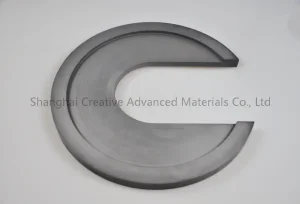
- Semiconductor Tooling: In high-temperature chemical vapor deposition (CVD) chambers and extreme plasma etching systems, SiC components act as high-purity wafer rings, susceptors, and structural brackets. Their high chemical resistance prevents trace metallic contamination, protecting delicate nanometer-scale wafer architectures.
3. Sourcing Strategy: Evaluating Tensile Strength, Elastic Modulus, and Fiber Layout
When establishing wholesale procurement channels for Silicon Carbide fibers, engineers must evaluate specific structural and mechanical specifications. Mechanical metrics such as tensile strength (typically 2.5 to 3.5 GPa) and tensile modulus (ranging between 280 and 420 GPa) represent baseline properties. However, fiber geometry—such as filament count (tows of 500, 800, or 1600 filaments) and diameter (typically 12 to 18 micrometers)—dictates the weaving efficiency, flexibility, and ultimate mechanical properties of the woven preform.
Furthermore, the chemical interface coating (typically pyrolytic carbon or boron nitride coatings applied via CVD) is crucial. This interphase layer manages the load transfer between the reinforcing SiC fiber and the surrounding ceramic matrix. It promotes micro-crack deflection, preventing catastrophic brittle failure and giving the CMC material its characteristic tough, non-brittle fracture behavior.
4. China Factory 4.0: Supply Chain Resilience, Scalability, and Quality Control
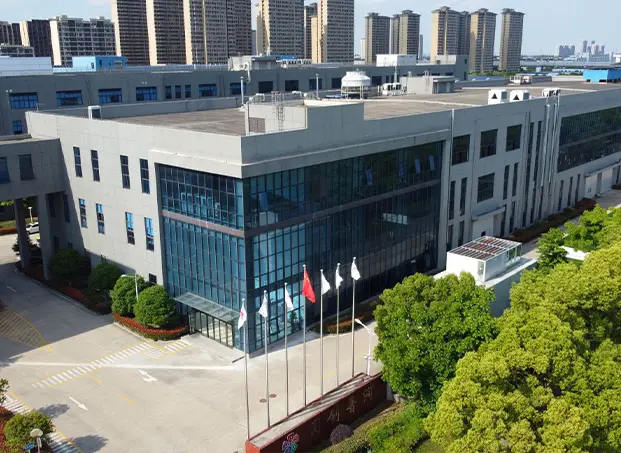
SCA leverages China's advanced manufacturing infrastructure to offer cost-competitive, high-performance materials. Our "Factory 4.0" facility integrates continuous precursor synthesis, automated spinning lines, e-beam curing stations, and computer-controlled pyrolysis chambers into a single, cohesive workflow. This vertical integration secures stable supply lines and guarantees chemical purity and batch-to-batch consistency.
Advanced online monitoring systems continuously track critical variables like precursor draw speeds, fiber diameters, and pyrolysis temperatures. The finished fibers undergo rigorous testing protocols, including scanning electron microscopy (SEM) for surface defect screening, X-ray diffraction (XRD) for grain size verification, and tensile testing to verify mechanical parameters. This strict quality control ensures every shipment meets international aerospace, nuclear, and high-vacuum processing standards.